How to Design a Science Lab Classroom
Table of Contents
How to Design a Science Lab Classroom means planning a safe, flexible learning space by organizing clear traffic aisles, maintaining instructor sightlines, selecting durable classroom-grade furniture, ensuring ADA accessibility, integrating proper utilities and ventilation, and creating adaptable layouts that support hands-on STEM instruction while meeting safety standards and long-term facility performance goals.
Start with Safety & Workflow Planning
Prioritize Safe Student Movement
Designing a science lab classroom starts with controlling how students move through the room. Clear aisle spacing prevents crowding, reduces trip hazards, and ensures students can navigate with glassware or equipment without bumping into others. Wide walkways also allow instructors to move freely for supervision. Schools comparing layout best practices often reference planning insights on the CampbellRhea design blog to understand effective traffic flow strategies.
Maintain Strong Instructor Sightlines
A well-designed lab keeps every workstation visible from the teacher’s primary instructional area. Straight bench layouts, angled stations, or peninsula designs help maintain open sightlines, enabling quick intervention when students need help. Good visibility also supports safety compliance during experiments involving heat sources or chemical handling. Reviewing completed classroom layouts in the CampbellRhea project portfolio helps educators see how sightlines impact daily lab management.
Plan Emergency Access & Clear Exit Paths
Emergency equipment—eyewash stations, safety showers, fire extinguishers, and exits—must remain accessible regardless of room configuration. Countertops, carts, and storage units should never block or partially obstruct these safety points. Designing with fixed reference markers prevents accidental encroachment as the classroom evolves or furniture shifts over time.
Strategic Placement of Sinks & Utilities
Sink locations directly affect workflow efficiency and safety. Sinks should sit close enough to workstations for quick cleanup but far enough to avoid crowding or splash zones during busy class periods. Gas, electrical, and data utilities should be accessible yet protected to prevent accidental interference during experiments. Schools exploring workstation configurations often browse the CampbellRhea product catalog for integrated utility solutions.
Provide Proper Ventilation & Chemical Storage
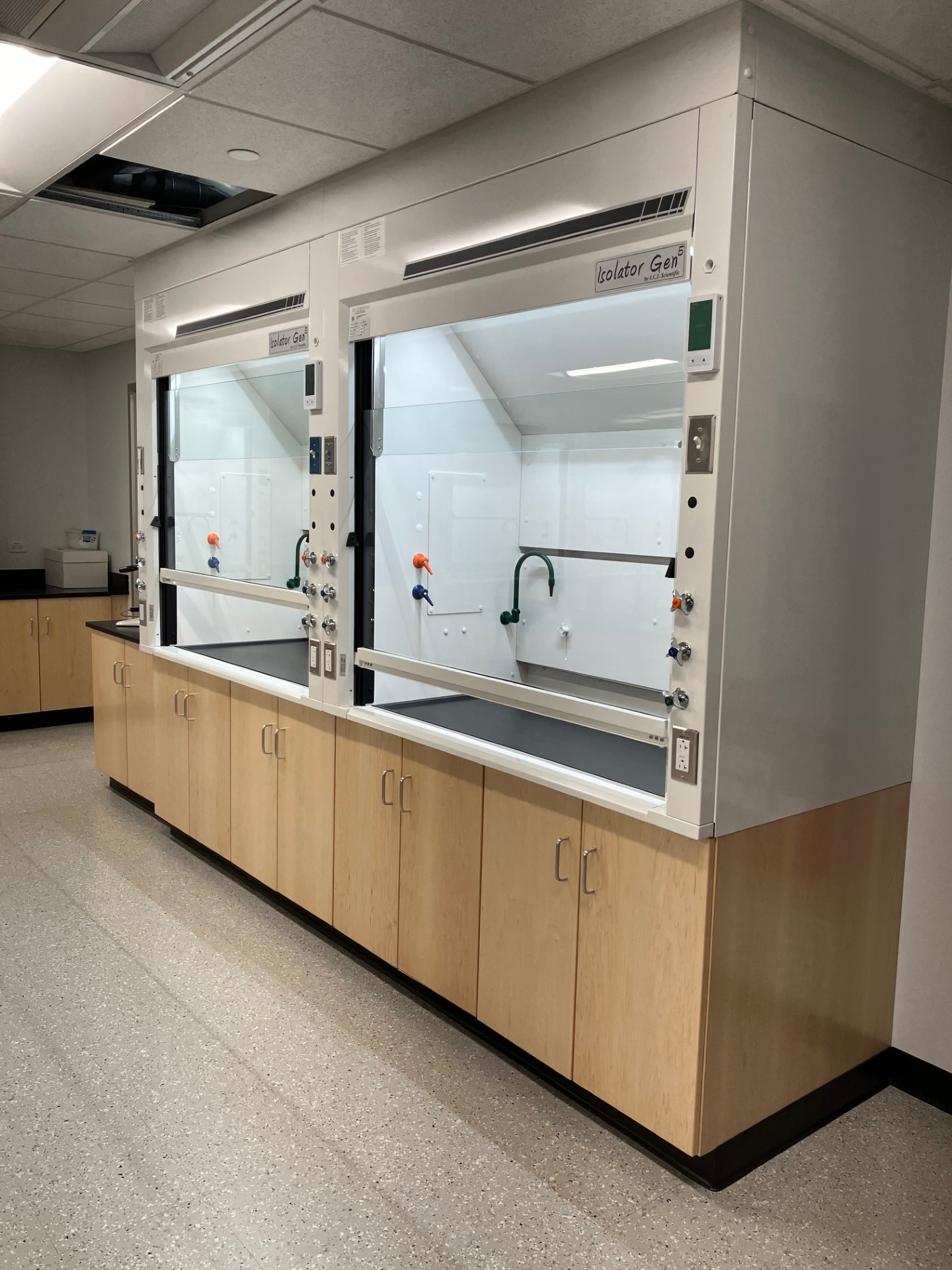
Ventilation is essential in classrooms using heat sources, vapors, or chemical reagents. While full fume-hood setups may not be needed for every grade level, localized ventilation and controlled airflow are key to safe instruction. Organized chemical storage cabinets should be placed away from high-traffic areas while remaining easy for instructors to access. Districts sourcing cabinetry frequently look to CampbellRhea Educational Wood Solutions for classroom-specific configurations built for safety and durability.
Design for Smooth Transitions
Effective labs handle the frantic pace of switching between lecture, group work, and hands-on experiments. Layouts should minimize bottlenecks at sinks, supply stations, and shared equipment zones. Positioning storage and countertop space where students can transition without piling up helps maintain classroom order and reduces risk.
Schools seeking help with safe layout planning typically reach out through the CampbellRhea dealer network or begin exploration directly with CampbellRhea for guidance tailored to real classroom conditions.
Choose Durable, Classroom-Appropriate Materials
Build with Furniture Designed for Teaching Labs
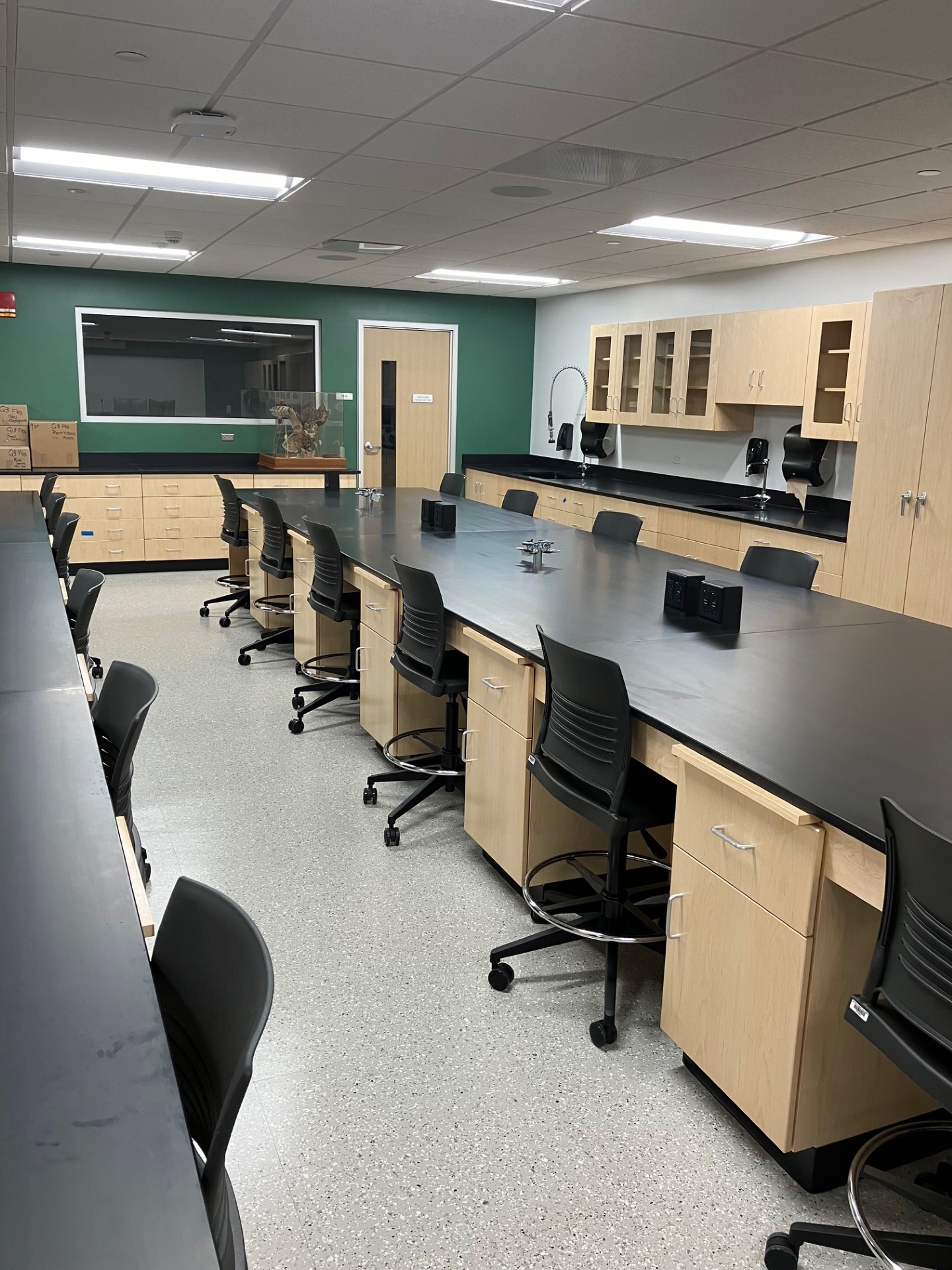
Educational labs demand furniture engineered for students, not industrial research scientists. Classroom furniture must handle fast-paced lessons, shifting equipment, and daily wear from dozens of users. Reinforced cabinet bodies, sturdy drawer construction, and impact-resistant finishes keep spaces functional even under heavy use. Districts comparing classroom-specific systems often begin with the CampbellRhea product library to distinguish education-grade construction from industrial alternatives.
Prioritize Chemical-Resistant & Moisture-Proof Surfaces
Counters and casework must handle routine spills—from mild acids to everyday cleaners—without swelling, staining, or degrading. Surfaces should resist moisture absorption and chemical etching to maintain a safe, clean workspace. Properly sealed edges and high-quality coatings are essential. Many schools evaluating real-world durability reference insights from the CampbellRhea design blog on how finishes perform under classroom conditions.
Choose Cabinets with Real Structural Reinforcement
Student labs require cabinetry that can withstand constant opening, closing, leaning, and storage weight. Reinforced frames and high-capacity shelving reduce long-term failures and keep contents safe. Casework built specifically for education—such as CampbellRhea Educational Wood Casework—provides the structural integrity needed for crowded classrooms, not just light-duty prep rooms.
Invest in Repairable Finishes for Long-Term Value
Classroom furniture takes hits—scratches, dents, worn edges—but disposable surfaces generate unnecessary replacement costs. Materials that can be refinished or repaired extend the lifespan of the entire room. Wood systems excel here: finishes can be renewed, surfaces restored, and components replaced without uprooting full workstations. Schools exploring lifecycle savings often study completed long-term projects in the CampbellRhea portfolios to understand maintenance advantages.
Design for Durability That Outlives Trends
Strong lab furniture isn’t trendy—it’s dependable. Systems should remain functional through curriculum changes, enrollment cycles, and instructional shifts. Cabinets, counters, and storage should maintain performance for decades, not just until the next renovation cycle. Districts looking for guidance on material selection or local support often connect through the CampbellRhea dealer locator or begin planning directly with CampbellRhea to ensure material choices align with real classroom demands.
Design for Flexibility & STEM Learning
Adapt to Hands-On STEM Instruction
Modern science classrooms must support far more than lecture-based teaching. Robotics projects, collaborative engineering builds, coding labs, and group experiments demand layouts that shift quickly between learning modes. Fixed furniture locks instruction into one format, while flexible systems allow educators to reconfigure spaces to match lesson objectives. Schools researching adaptable classroom solutions often explore layout strategies highlighted on the CampbellRhea design blog to see how flexibility improves daily instruction.
Use Modular Bench Systems
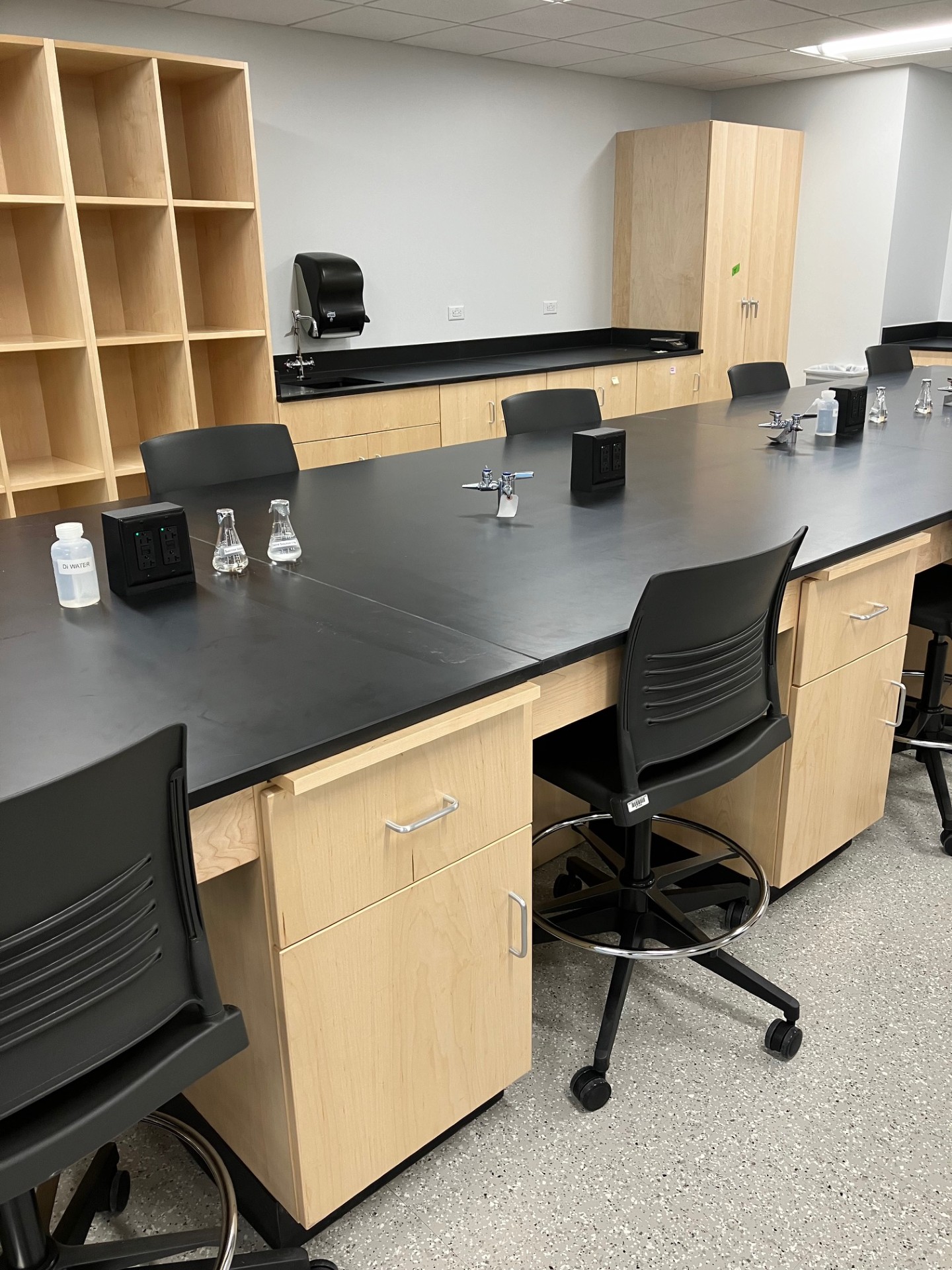
Modular benches create the structural backbone of adaptable labs. These systems enable:
- Quick reconfiguration of seating arrangements
- Conversion from demonstration rows to teamwork clusters
- Expansion or contraction of work zones as class sizes change
Bench configurations designed specifically for teaching labs can be reviewed within the CampbellRhea product collections where education-grade modular furniture systems are built to move safely and lock securely when repositioned.
Integrate Mobile Workstations
Mobile workstations bring motion into learning. Rolling tables, equipment carts, and supply stations allow students to pull tools into their workspace instead of crowding shared prep areas. This reduces congestion at fixed stations while keeping lessons flowing smoothly.
Educational benefits include:
- Faster classroom transitions
- Increased student collaboration
- Improved instructor access during group projects
Examples of mobile furniture used in active STEM classrooms are showcased across real installations in the CampbellRhea project portfolio.
Prioritize ADA-Accessible Learning Stations
Accessibility must be built into flexibility planning. Height-adjustable stations with knee clearance and compliant aisle spacing ensure students of all physical abilities participate equally in experiments, digital learning, and group activities. Accessible stations should be integrated into standard layouts—not isolated as separate zones—so inclusion remains seamless.
Many schools specify adaptable casework such as CampbellRhea Educational Wood Systems to support inclusive planning requirements.
Reconfigure for Curriculum Evolution
STEM education evolves constantly. Furniture that supports rapid layout changes protects classroom investments as teaching methods shift.
Effective reconfigurable systems allow classrooms to convert between:
- Lecture seating
- Team collaboration hubs
- Robotics build bays
- Lab experiment stations
- Presentation and demonstration areas
Facility planners often rely on regional specialists found through the CampbellRhea dealer locator or coordinate directly with CampbellRhea to develop flexible design strategies aligned with long-term curriculum goals.
Why CampbellRhea Is the Right Design Partner
Over 70 Years of Classroom Lab Expertise
CampbellRhea has spent more than seven decades exclusively focused on laboratory spaces built for education—not adapted from industrial environments. This experience translates into classrooms designed to withstand student traffic, curriculum changes, and safety demands without sacrificing functionality or longevity. Facilities leaders researching education-specific design methods frequently turn to planning insights shared on the CampbellRhea design blog for proven classroom layout strategies.
SEFA-Compliant, U.S.-Made Manufacturing
Safety and durability are built into every CampbellRhea system through compliance with SEFA standards, which verify structural performance, material resistance, and long-term reliability. Manufacturing takes place exclusively in the U.S., ensuring consistent material quality, responsible sourcing, and dependable production timelines. Schools evaluating verified classroom furniture solutions explore detailed specifications within CampbellRhea’s full product lineup.
Custom Wood Casework Purpose-Built for Education
CampbellRhea’s wood casework systems are engineered specifically for classroom performance, combining chemical-resistant finishes with reinforced cabinet construction and durable countertop integrations. Unlike off-the-shelf furniture, these systems are designed to accommodate real-world classroom demands—constant cabinet use, mobile equipment movement, and evolving lab layouts. Many districts rely on CampbellRhea Educational Wood Solutions to create long-lasting instructional environments.
Integrated Furniture & Safety Systems
Complete classroom labs require more than cabinetry alone. CampbellRhea delivers fully coordinated furniture solutions that integrate:
- Modular workbench systems
- Mobile workstation platforms
- ADA-accessible learning stations
- Chemical storage and ventilation support
- Safety equipment placements
These components function cohesively as part of engineered classroom systems displayed throughout the CampbellRhea classroom portfolio.
Professional Design Services Using AutoCAD & BIM
CampbellRhea provides professional planning assistance utilizing AutoCAD and BIM tools to support accurate space modeling, utility coordination, and compliance alignment before installation begins. This reduces changes during construction, minimizes schedule delays, and ensures classrooms install as designed—with no guesswork.
Schools coordinate these services locally through the CampbellRhea dealer network or engage directly with CampbellRhea’s design specialists to develop classroom environments that remain adaptable and safe for decades.
Complete End-to-End Classroom Partnership
From early layout consultation to manufacturing, delivery, installation coordination, and post-project support, CampbellRhea serves as a true end-to-end classroom lab partner. Their systems unite safety compliance, flexible furniture design, and U.S.-made durability into classrooms built specifically for educational performance—offering schools learning environments that stay safe, functional, and future-ready as instructional needs evolve.
Related searches
How to design a science lab classroom
Science lab classroom layout ideas
Best furniture for school science labs
Flexible STEM classroom design tips
CampbellRhea science lab casework